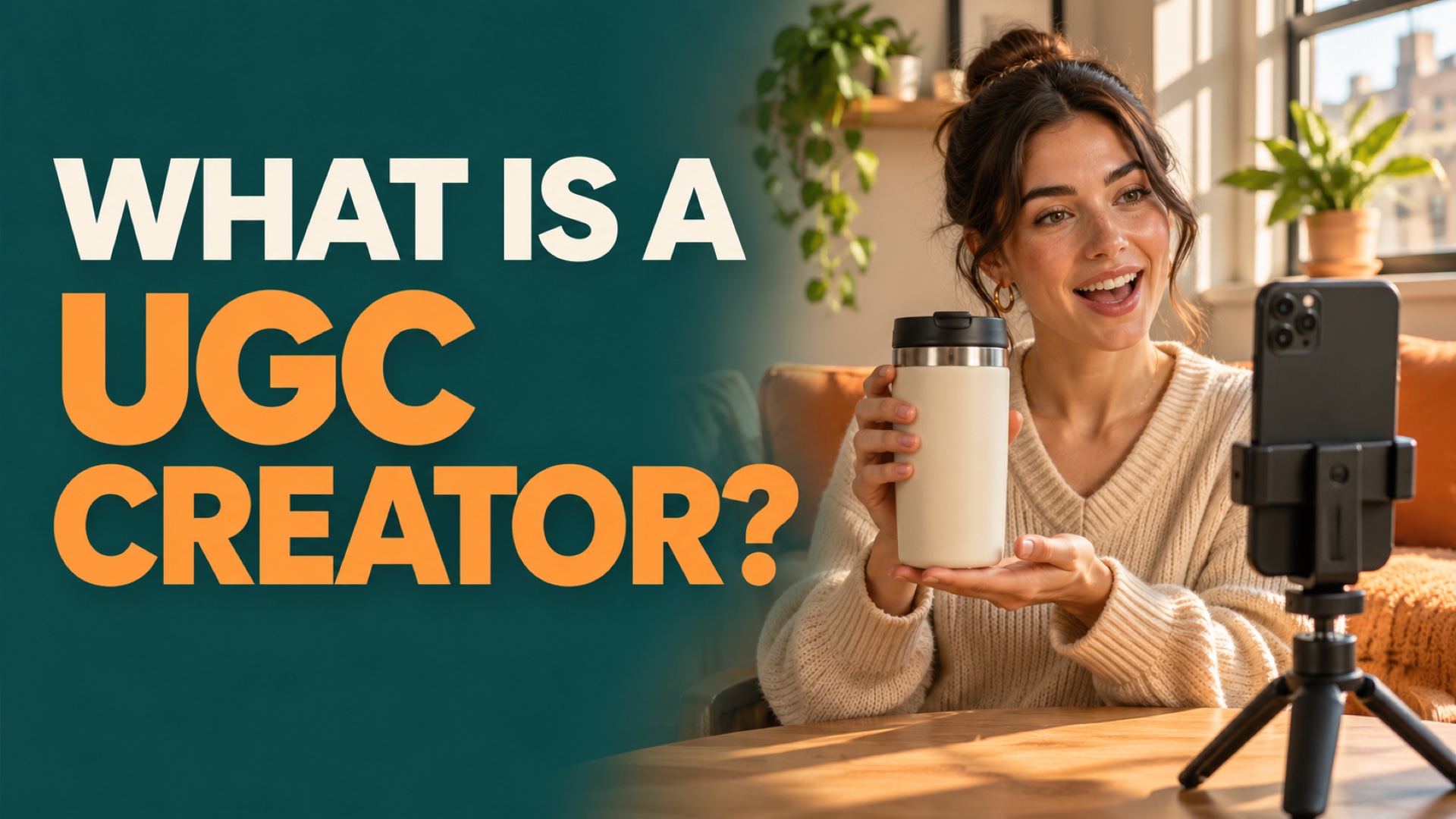
What is a UGC creator? A user-generated content (UGC) creator makes photos or videos that show a product in use. In paid UGC work, a brand hires you to make an asset such as a short product demo, then uses it on the channels you agreed to. You can start with content-only jobs, where you deliver the file and the brand handles posting. A phone, a product you already use, and a few clear samples are enough to put together your first pitch.
Table of contents
What does a UGC creator get paid to make?
Say a brand sells a travel mug with a lid that comes apart for cleaning. It might hire you to film a 25-second vertical demo that shows how to open the lid, remove the gasket, and put everything back together. The finished video could go on the brand’s product page or social feed. If the brand wants to run the clip as a paid ad, settle those permissions when you agree on the job.
The deliverable is usually something you can describe in one sentence. An unboxing shows what arrives and how it’s packed. A hands-only demo walks the viewer through a task. A screen recording shows how an app works, ideally using a sample account that keeps private information out of the footage. A testimonial describes an experience you’ve actually had with the product. A short script with two alternate openings can give a client material to test, provided you agree on what each version includes.
UGC originally describes material users make, such as a customer’s unsolicited video. Brands also commission videos in that style and call the work paid UGC. A sponsored post on your own account adds a distribution job, with its own audience and posting requirements. Ask which arrangement the buyer wants before you price the project. For examples of where demos and testimonials fit into a campaign, see Market Burner’s guide to video marketing.
How to become a UGC creator with your first samples
Pick an item you know well enough to demonstrate without reading the box. A kitchen scale, a travel mug, or an app you already use can work. Choose one question someone might have before buying. For the mug, that could be whether the lid comes apart for cleaning. The narrower the question, the easier it is to decide which shots belong in the clip.
Film one useful product demo
- Write an opening that calls out the task. For a practice clip, you could say, “Here’s how the lid comes apart when coffee gets trapped underneath.” Then plan the shot that proves it.
- Set your phone vertically on a stable surface near a window. Record a wide shot to establish the setup and close-ups of each step. If your hands cover the mechanism, move the camera and shoot that step again.
- Edit out the pauses and add readable captions. Play the export with sound off and check whether someone can follow the steps. Play it again with sound on and listen for the fridge, traffic, or anything that drowns out your voice.
- Label the finished clip as an independently made practice sample. Use that description in your portfolio so nobody mistakes it for a paid campaign or assumes the brand commissioned it.
If a jump cut makes a step look easier than it is, add a close-up that shows the full movement. Keep the practice edit as short as the task allows. A 20-second version that finishes the demonstration gives a buyer more to judge than a long montage of attractive shots.
Build a UGC creator portfolio that plays on a phone
Use one publicly viewable page with your name, an email address, and a few samples that show different abilities. Put the most relevant clip first. For a kitchen brand, a clean demonstration could lead, followed by an on-camera introduction and an unboxing with a voiceover. Add a one-line caption under each video that says what it demonstrates and what you handled, such as filming, editing, or captions.
Use these UGC portfolio examples to choose clips that fit the products you want to pitch.
| Sample | What a buyer can judge |
|---|---|
| Hands-only travel mug demo | Can you keep a small feature in focus and make the steps easy to follow? |
| Screen recording of a meal-planning app | Can you guide the viewer through one task without showing private information? |
| On-camera introduction for a desk lamp | Can you speak clearly and cut to footage that shows the feature you mention? |
Open your portfolio link in a private browser window on a phone. If a video requests access, set sharing on the sample itself and test again. Avoid sending a folder full of raw footage. A buyer should be able to play the clip you referenced, see what service you offer, and find your contact details from the same page.
Where to find UGC creator jobs
Creator marketplaces and direct outreach give you two ways to find a brief. Start with one of each so you can see the kinds of work available before you spend a week filling out profiles. A marketplace shows the work on offer in its system. Direct outreach lets you propose a specific idea to a brand whose products you can demonstrate.
On Billo, creators can set up a profile, submit a video pitch, and apply for offers in the creator app. Review the deliverables, approval process, and any posting or ad permissions tied to the offer before accepting. Billo documents those steps in its creator getting-started guide.
JoinBrands offers content-only and social posting jobs. Some jobs ask you to buy the product and use the platform’s reimbursement process. Read that job’s instructions and check which costs it covers before spending. JoinBrands lists the U.S. among its supported markets and maintains a country eligibility page. See its creator job descriptions for the purchase and shipping arrangements.
How to get UGC deals with a short pitch
Find a product page with a feature a short video could explain. If a bag has an expandable pocket and the photos show it only when empty, pitch a clip that shows what fits before and after expansion. Contact the brand through an address on its site or a verified business profile. Send one idea and your closest sample.
Example pitch.
Hi, I’m Maya, a freelance video creator. I saw the expandable pocket on your commuter tote. I can film a 25-second vertical demo showing what fits inside before and after it expands. Here’s my hands-only sample [portfolio link]. If you’re commissioning product clips this month, I can send a quote for the edited video and any paid ad use you need.
Track the product, contact, sample sent, and reply. If people open the sample and ask for a different format, make the next sample in that format. If you get no replies, check whether the email went to a person who commissions content and whether the clip actually resembles the work you pitched. Follow up once with the original context so the recipient can find the proposal.
How much do UGC creators make per project?
A project quote depends on the work and how the buyer plans to use the result. Estimate all the time you’ll spend on the job, including reading the brief, writing a script, setting up the shot, editing, making the included revision, and delivering the file. Check any platform fees and direct expenses before deciding what the work pays you.
Hypothetical quote. Suppose you quote $150 for one edited 30-second video, one revision, and 30 days of posting on the brand’s own unpaid Instagram feed. The project takes four hours and costs you $10 for a prop. You have $140 left before fees and taxes, or $35 an hour for that job. That figure excludes time you spent finding clients and represents one made-up project, so use the calculation with your own numbers.
If the buyer later asks for two extra opening lines and 60 days of paid ads, spell those out in the revised quote. The new openings need filming or editing, and the ad request expands where and for how long the buyer can use your work. Ask whether they want permission to run the delivered file from the brand account or promote a post from your account. TikTok’s Spark Ads can use a creator’s organic post with authorization. TikTok’s Spark Ads guide
Confirm the first brief before you film
- Deliverables. Agree on the number of videos, length, format, captions, alternate openings, and whether the buyer wants raw footage.
- Timeline and revisions. Confirm when the product should arrive, when the first cut is due, and which changes the included revision covers. If the approved brief changes after filming, agree on the cost and timeline for a reshoot.
- Usage and payment. Write down where the video may appear, how long the permission lasts, and whether it includes paid ads, account authorization, or restrictions on working with competitors. Confirm the amount, who approves the file, and when payment is due. Platforms may set these terms themselves, so read the offer before applying.
Ask for the product claims and required wording in the brief. If they want you to say you’ve used something for a month and you received it yesterday, offer a demo of what you can verify. For endorsements aimed at U.S. consumers, the FTC says to make material connections, including payments and free products, clear to viewers. For a video endorsement, put the disclosure in the video itself. Agree with the brand on where it appears and check that the final cut still contains it. FTC disclosure guidance
A brand offer that arrives by direct message deserves a separate check. Find the brand’s actual website and use the contact details there to verify the sender. Walk away if the supposed recruiter asks for a deposit to unlock the job, sends a check and asks you to return part of it, or asks for your bank details before you can confirm the offer. Marketplace reimbursements should follow the written workflow inside the real platform. FTC guidance on creator job scams
If you have a phone and one suitable product, film the close-up that would answer a buyer’s question today. Once you’ve edited the demo, send it to a brand that sells something similar and pitch one scene you could make for them.
UGC creator FAQ
Do I need followers to get paid for UGC?
You can pitch content-only jobs with a portfolio and a small or private personal account. Check the brief before applying. A deal that includes posting on your account may have audience, platform, or account requirements.
Can I make UGC without showing my face?
Yes. A hands-only demonstration, screen recording, or voiceover can show a product clearly. Apply to briefs that accept the format and mention it in your pitch. If the client wants someone speaking on camera, show a matching sample or pass on the job.
Do I need to buy products for my UGC portfolio?
Start with items you already own and use. Film a clearly labeled sample that demonstrates a real feature. If a client needs you to obtain a specific item, confirm who pays, what the reimbursement covers, and when it arrives before ordering.
Should I send raw footage to the brand?
Send raw files when they’re part of the agreed scope. Confirm which clips the client wants and how they may edit and use them. A request for every take is different from a request for two specific clips to make an alternate opening.
Can I show paid client work in my portfolio?
Ask for written permission and check any contract or launch restrictions. If the client approves after launch, confirm whether you can embed the public post or host your own copy. Keep practice clips available for pitches while you wait.